
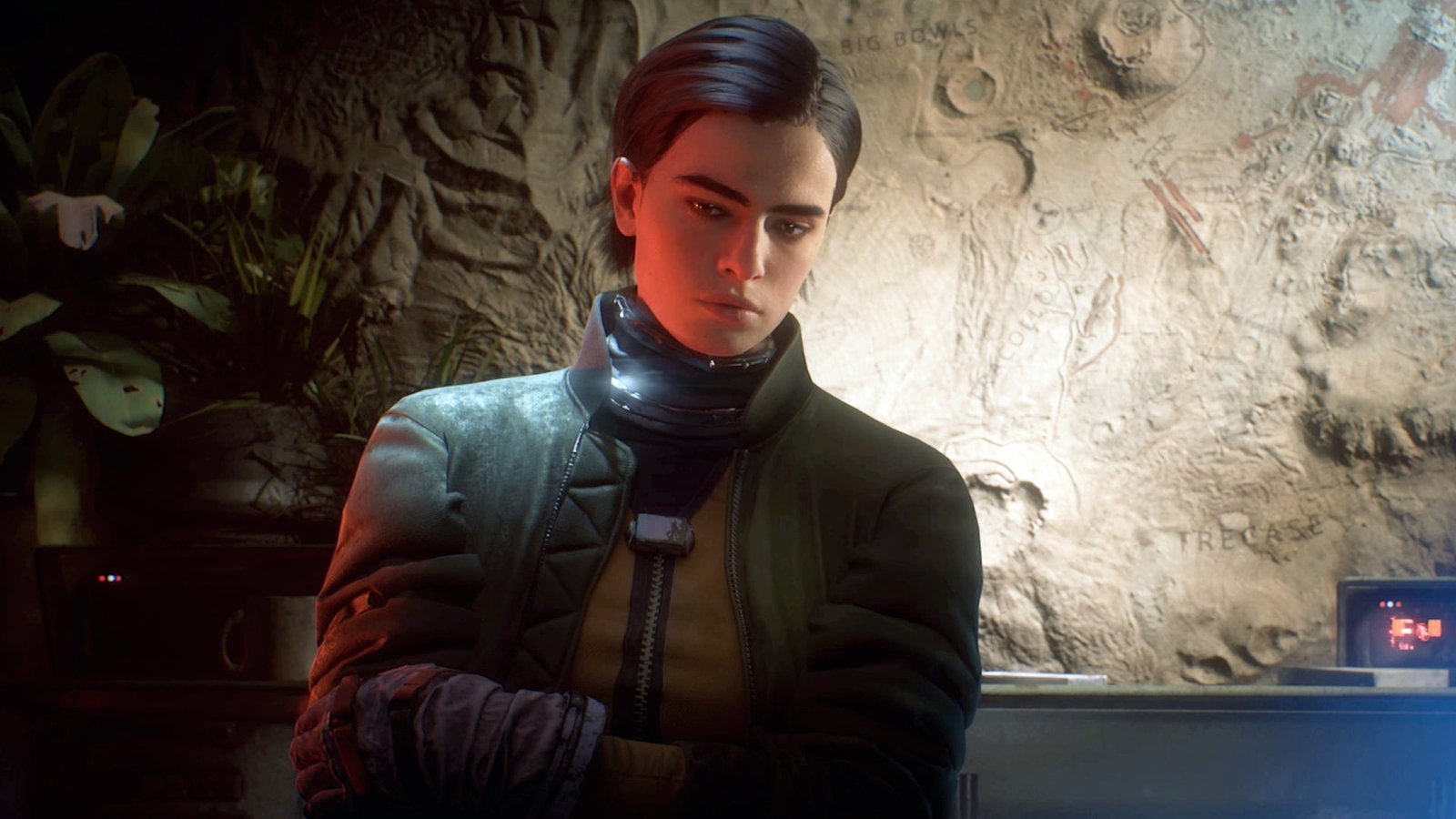
Few topics in games right now split a room faster than AI voice lines. So when Embark Studios published a behind-the-scenes audio video for Arc Raiders and used it to defend the game’s use of generated speech, the reaction was predictable. Chief creative officer Stefan Strandberg spent part of the footage insisting that the studio is “not in the industry of replacing actors” — a claim that sits awkwardly next to the fact that the game did, in fact, generate lines from actors’ recorded performances.
But the video is worth watching past the headline quote. Buried in it is a genuinely interesting description of how modern live-service games produce dialogue at a scale that was never really practical before. Whether you find that exciting or unsettling probably depends on how you feel about AI in general — and, frankly, a lot of the pushback is reflexive rather than reasoned.
What Embark actually built
Arc Raiders doesn’t use one voice pipeline. It uses two. Actors come into a studio and record the substantial material — character dialogue, story beats, the performances that carry emotional weight. Then there’s the long tail: ping call-outs, quest barks, in-level mission briefings, the dozens of short lines that fire constantly during a match and change depending on context.
For that second category, Embark trained models on the same actors’ voices and generated the lines instead of booking another session. Audio director Bence Pajor frames the reasoning around scheduling pressure. Actors have other jobs, other shoots, other projects; when a new feature suddenly needs a hundred fresh lines, getting everyone back into a booth is a logistical headache. CEO Patrick Söderlund has since said the studio is gradually swapping generated lines for recorded ones — a sign that the “hybrid” label was always the intent, though the timing of that walk-back is convenient given how well the game has performed commercially.
The availability excuse has a few holes
Here’s where the argument gets shaky. Pajor points to the combinatorial explosion of the ping system — every variable multiplies the number of possible lines — and concludes it “becomes too impractical to record every possible version.” He adds that actors would struggle to read that much material without losing their minds.
That reasoning ignores about thirty years of counterexamples. Disco Elysium shipped a staggering volume of recorded dialogue. Baldur’s Gate 3 did too, then patched in more. Apex Legends, a live-service shooter in the same genre bracket, has been adding and re-recording voice lines through updates for years without leaning on generative models. Studios have always solved the availability problem with scheduling, larger pickup sessions, modular line design, and writing that accounts for what’s actually feasible to record.
So the honest version of Embark’s argument isn’t “this was impossible otherwise.” It’s “this was cheaper and faster.” That’s a legitimate business motivation. It’s just not the one being presented.
What the actors say — and the part that stings
The most interesting footage in the video features Jo Rideout and Diana Gardner, who play Shani and Celeste. Gardner’s take is more nuanced than either side of the debate usually allows. She notes that if a session only needs an hour of her time for a handful of short call-outs, she doesn’t have to cancel other work, and she describes the contract as fair — a no-brainer.
Then comes the caveat that lands harder. She admits she didn’t know how she’d feel hearing her own generated voice, and that the real question was ownership: hours of her work went in, but the final product isn’t hers to claim.
That tension is the whole issue in miniature. Not exploitation, necessarily — but a quiet erosion of authorship that the contract didn’t resolve for her.
The case for generated voices is stronger than the backlash suggests
Here’s where I part ways with the internet consensus. Generative voice work is not inherently slop, and treating every use of it as an artistic crime is a lazy shortcut. Consider what it actually unlocks.
- Volume without bloat. Contextual barks multiply fast. Procedural generation lets a game acknowledge what you’re doing without building a recording budget that scales with every edge case.
- Faster live-service turnaround. Seasonal events, hotfixes, balance patches — features often ship on tight timelines that don’t accommodate booking talent. Generating a handful of lines keeps the game responsive.
- Localization reach. Dubbing into a dozen languages has always been expensive enough that many games simply don’t. Voice cloning from the original performer’s consented recordings could open markets that never got proper audio.
- Smaller teams get a seat. Studios without AAA budgets have historically been locked out of fully voiced design. Tools that lower that barrier are not automatically a downgrade in craft.
- The human performance stays central. The model is trained on the actor who was hired. Players still hear that performer’s timbre and delivery — not a stranger’s approximation.
Anyone who has spent time in a raid will tell you that a ping line is functional audio. It exists to transmit information, not to move you. Judging a generated call-out by the standard of a story cutscene is a category error, and it’s the same mistake people make when they call every AI-assisted image “slop” without looking at it.
Where the line should actually sit
The fair criticism isn’t that Embark used the technology. It’s that the studio wrapped a cost decision in a narrative of necessity, and that once a company discovers how efficient a workflow is, it tends not to walk that back. The real safeguards are contractual: clear consent, fair compensation for the training use, credit, and limits on how a voice can be redeployed.
| Argument | Strongest version | Weakest version |
|---|---|---|
| Scale | Contextual lines multiply beyond practical recording limits | Treated as impossible when other games manage it |
| Scheduling | Actors gain flexibility and avoid cancelled gigs | Used to avoid booking sessions altogether |
| Craft | Hands time back to performers for emotional scenes | Used to skip hiring talent in the first place |
Verdict
Embark’s messaging is muddled and its walk-back is late, but the underlying tool is not the villain here. Generated voice lines are another step in a long line of production shortcuts — procedural generation, mocap cleanup, pitch correction — that once sparked outrage and later became invisible. What matters is the paperwork: consent, payment, credit, and an honest public account of what’s being recorded versus what’s being synthesized.
Players should push for that transparency. They shouldn’t automatically assume that a synthesized ping is an insult to the person who voiced it. Sometimes progress is just progress, and the loudest reaction isn’t the most considered one.
Media
Source: Rock Paper Shotgun