
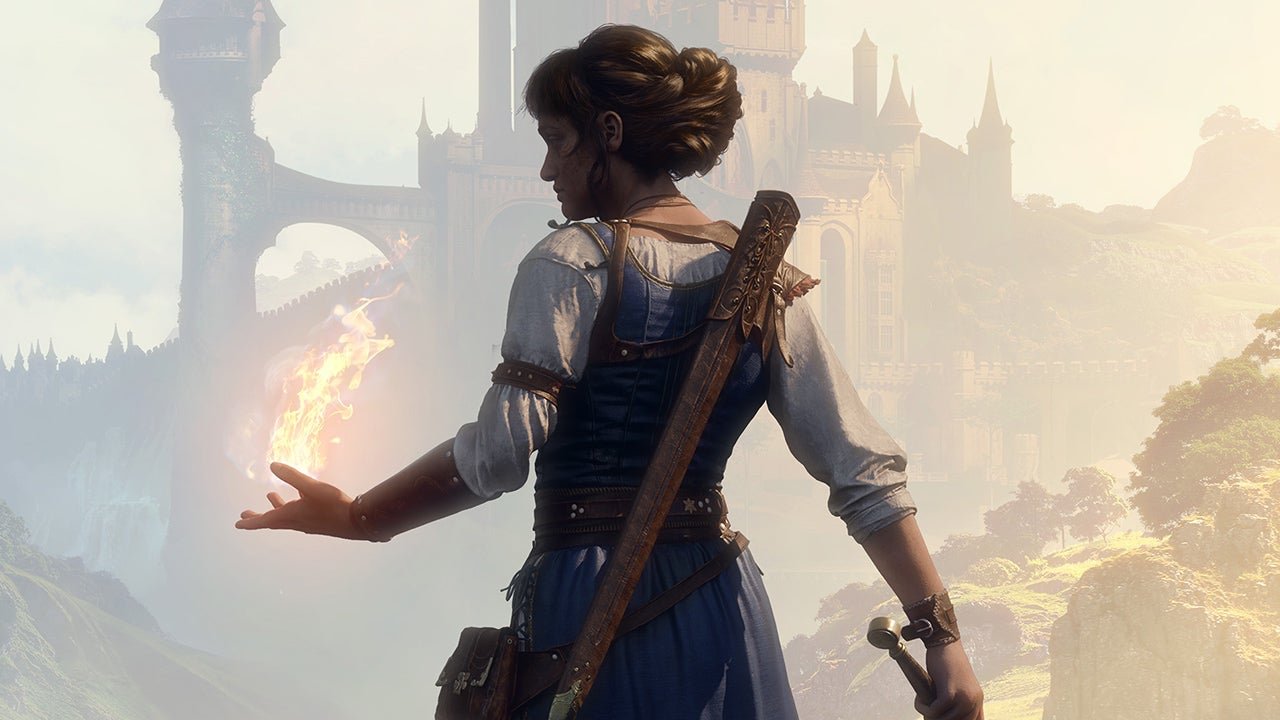
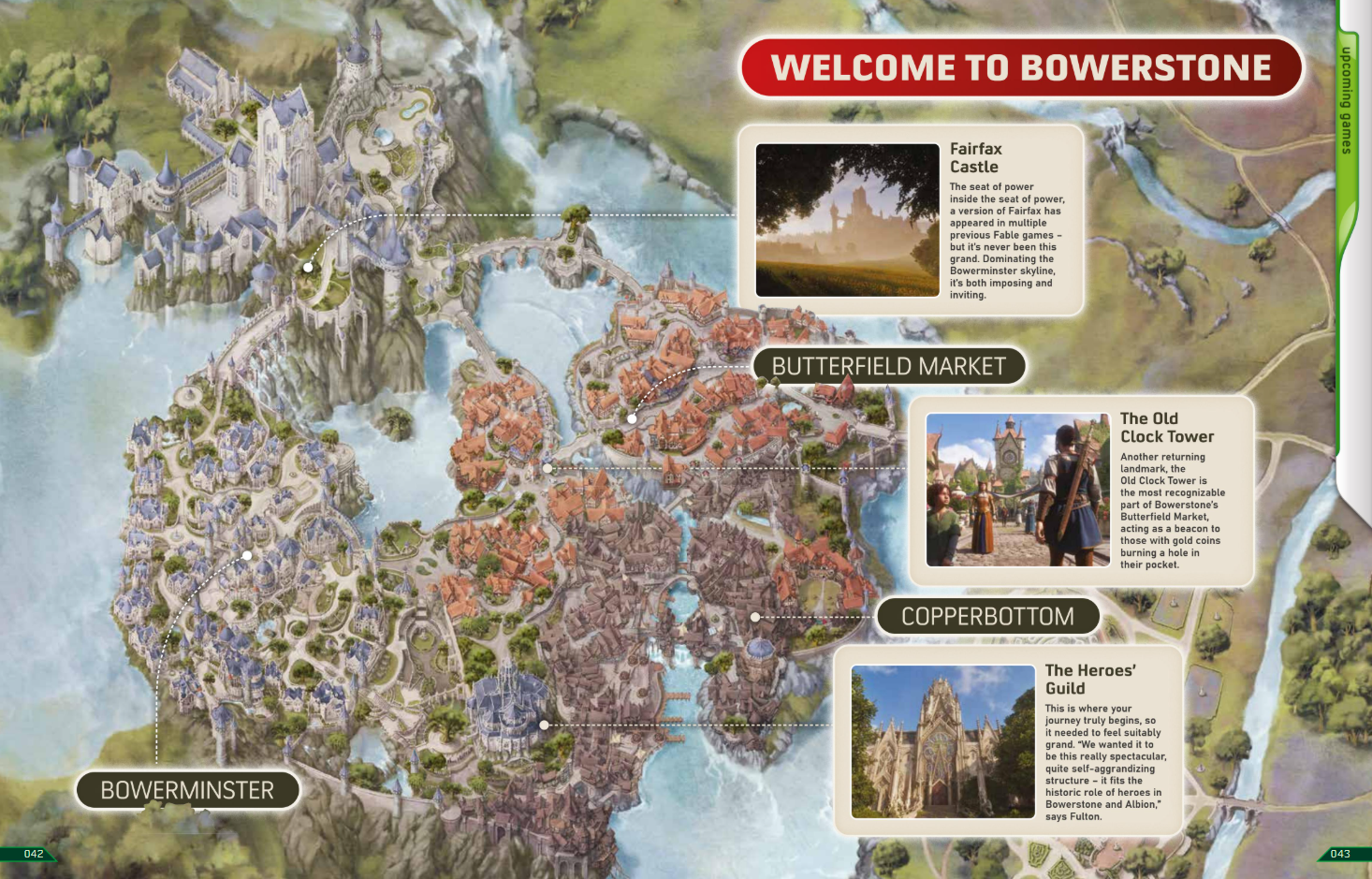
Ask a Fable fan what they remember most and the answers tend to cluster: the dog, the moral choices, the accent of a certain trader. But the place that anchors almost every memory is Bowerstone. So when Playground Games used its latest deep dive to pull back the curtain on the returning capital of Albion, the immediate takeaway was less about nostalgia and more about square footage. The new Bowerstone, by the look of it, is enormous.
That single detail carries more weight than it might first seem. A city map is never just a map in this series — it is the stage where the tone, economy and hubris of Albion get played out. If Bowerstone is being rebuilt at this scale, the reboot is signalling that its ambition stretches beyond a faithful re-skin.
What the deep dive actually showed
The presentation walked through the design of Bowerstone as the game’s central hub, with the map reveal serving as the centrepiece. Rather than a handful of connected streets, what appeared was a sprawl — layered districts, broad sightlines and enough ground that traversal itself becomes a consideration.
For a series that once used compact town squares as its social heart, that is a meaningful shift. Fans have spent years comparing notes on how dense a modern Fable should feel, and the answer here seems to be: big enough that you will not know every cobblestone by memory within an hour.
Bowerstone has always been a barometer for the series
It helps to remember that Bowerstone was never static. Each game aged it forward by decades, and the architecture tracked the politics of the era.
| Game | What Bowerstone was | Design intent |
|---|---|---|
| Fable (2004) | A modest market town split north and south | Introduce trade, property and reputation |
| Fable II (2008) | Market, cemetery, Old Bowerstone and Fairfax Gardens | Show industrial growth and class division |
| Fable III (2010) | Industrial sprawl under a castle | Frame revolution and the cost of ruling |
Seen through that lens, scale is a storytelling device. The Bowerstone of the original game felt provincial because Albion was provincial. The Fable III version felt oppressive because the monarchy had grown oppressive. A larger map in the reboot implies a bigger, more complicated society — one where districts can plausibly hold different values, incomes and grievances.
Size is easy to promise, density is hard to deliver
Here is where a little scepticism is healthy. Open-world marketing has spent two decades teaching players that big maps are cheap to generate and expensive to fill. A huge Bowerstone only pays off if the space earns its keep.
- Population: wide streets need crowds, routines and schedules to feel alive.
- Interaction: more buildings means more doors, and doors that open create expectations.
- Fast travel: if a city is this large, player movement and navigation design matter as much as the art.
- Performance: Playground’s Forza Horizon work proves technical competence, but a simulated town is a different engineering problem entirely.
The reassuring part is the studio’s reputation. Playground Games has spent a decade building worlds that hold up at speed, with a level of polish that rarely ships unfinished. Translating that discipline from racing lines to city layouts is plausible, even if it is not guaranteed.
Why this matters beyond one city
Bowerstone tends to function as a thesis statement for the rest of Albion. If the capital is sprawling and populated, the countryside around it will probably be built to match — trade routes, outskirts, the kind of connective geography that makes a hub feel like part of a country rather than an isolated set. For players who worried the reboot would play it safe with a compact, corridor-like tribute to the originals, this reveal points the other way.
It also reframes the conversation around expectations. A generation of players met this series on old hardware with tight budgets and tight maps. Handing them a Bowerstone that takes real time to cross is a promise about time investment — and a risk, because sprawling hub cities can lose the intimate, gossipy quality that made the originals memorable in the first place.
Verdict and takeaway
The takeaway is straightforward: Fable is betting that grandeur is the right way to reintroduce Albion, and Bowerstone is the proof of concept. Whether that bet lands depends on something no map reveal can show — whether the streets are worth walking slowly.
Until release, keep two questions in mind. First, does the city have the population density to justify its footprint? Second, does it preserve the small-town personality that made the original Bowerstone feel like a place rather than an asset? If both answers are yes, the scale will read as ambition. If not, it will read as padding — and fans who grew up in those market squares will notice immediately.
Media
Source: IGN News