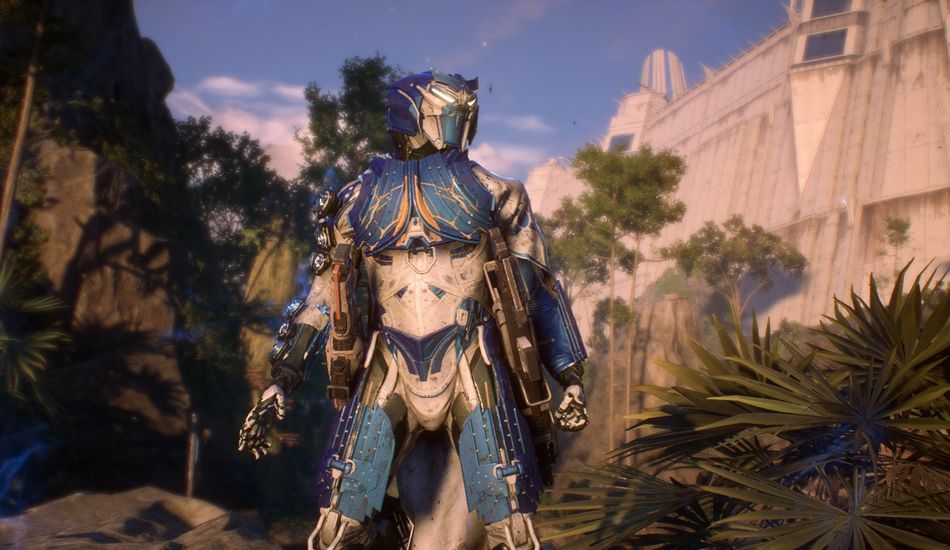
Anthem could rise again as single-player RPG, says ex-BioWare dev
So, Anthem is officially dead, with EA pulling the plug on the servers. It's a bummer for those who dug the sci-fi world and the sweet flight mechanics, but probably a relief for others. I remember when Anthem dropped in 2019; the freelancer life didn't come with a mech suit, sadly. When Destiny calls you a Guardian, at least it sounds cool, not like a reminder of your precarious economic situation, right?
But "officially unsupported" doesn't always mean "gone forever". Mark Darrah, who used to be an executive producer on Anthem and a big shot with Dragon Age and Mass Effect, has a plan to bring Anthem back. He thinks it could work as a single-player RPG, and he reckons it would take a "conservative" budget of $10 million.
The Plan: From Online Shooter to Solo Adventure
Darrah laid out his idea in a lengthy video called "The Truth About What Happened on Anthem." First, he suggests updating the game for current consoles, bumping up the graphics, and locking it to 60 frames per second. He figures that's "not too difficult" because you're mostly just throwing better hardware at the problem. Hmm, I'm not so sure about that "not too difficult" part when it comes to updating games for new hardware. But hey, I didn't oversee the development of Mass Effect and Dragon Age games, so what do I know?
Next up, Darrah suggests moving to locally hosted servers. Apparently, Anthem actually had code for local servers running in a development environment not long before launch. He doesn't know if it still works, but he thinks it's worth salvaging. Local servers would save EA the cost of keeping the game online. To keep things running, they'd likely need to rely on player donations, similar to what happened with City Of Heroes after NCSoft stopped supporting it.
The big chunk of work, according to Darrah, would be turning Anthem into a single-player story-driven game. Considering the combat was designed for a group of four, he says most of the $10 million would need to go into creating AI party members. And since it's BioWare, he suggests going all-in and making them companions.
He suggests that the team could promote some existing characters or just create three to five brand new characters with dialogue and plot arcs. Darrah believes that writing those characters isn't very difficult. The hard part, he says, is making the AI companions move with you and fight in a meaningful way. You'd need to figure out how an AI-controlled Javelin pilot can stick with you in the world.
If they can pull all of that off, Darrah believes they'd essentially reverse-engineer a BioWare game, without the romances, but with a decent BioWare-style story and companions that can be played solo. He knows this would appeal to people who skipped Anthem because they hate multiplayer looting and shooting. But he also thinks you probably couldn't sell it for the usual $70 price tag, and he doesn't see it selling millions of copies.
Darrah doesn't think EA will be interested, since his plan goes against their previous attempts to fix Anthem with a live service reboot.
Darrah wrapped things up by talking about game preservation in general. He points out that we're starting to see media disappear because rights holders are intentionally making it unavailable. He mentions Disney's Willow TV series and the unreleased Batgirl movie as examples.
He raises the question of whether companies should be required to keep their games playable indefinitely. While the requirements to keep Anthem fully playable from the start would have been substantial, he suggests there might be a way to create a single-player version that doesn't need dedicated servers. Perhaps there could be legislation to keep games playable in some form beyond their intended lifespan.
Darrah also gave a shout-out to Stop Killing Games, a movement pushing for laws that would require publishers to avoid making games unplayable by taking servers offline. While their goals are ambitious, he's glad the conversation is happening. The UK Green Party is even considering making support for SKG's objectives official policy, and the issue has been debated in Parliament.
1 Image of Anthem:
Source: Rock Paper Shotgun